Mirror Halftone Installation
Mirror Halftone Installation
Haltone Translation · Mirror Surface Fabrication
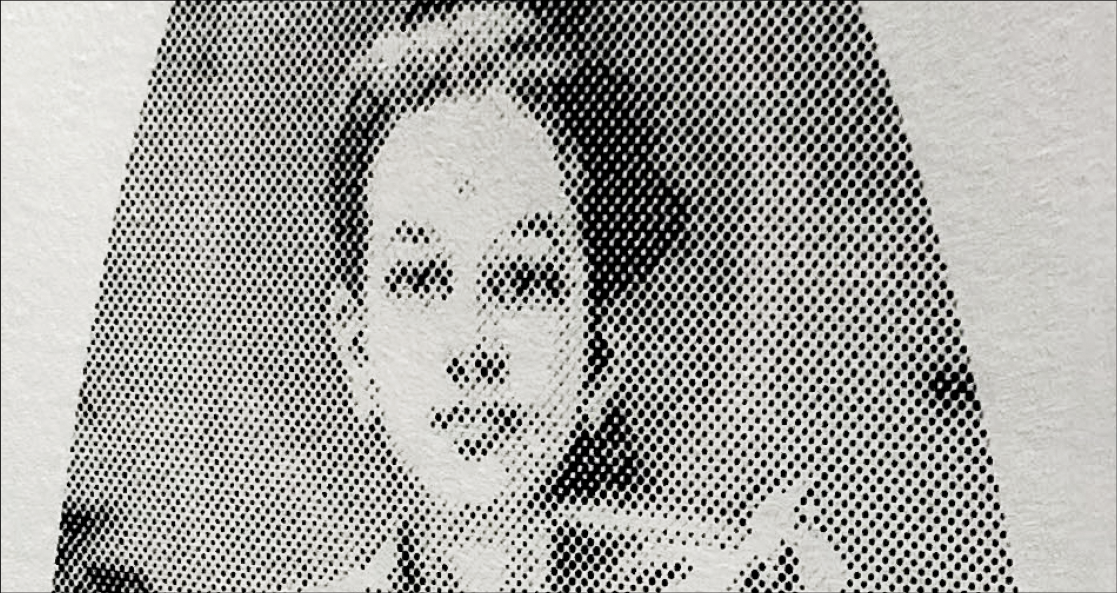
A raster image was translated into a precision halftone pattern and fabricated using experimental vinyl stencil techniques designed to withstand abrasive sandblasting on mirrored surface.

Client-provided artwork used as source reference.
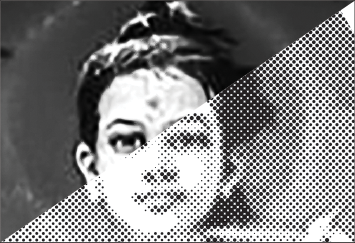
Artwork converted to halftone pattern for fabrication.

Vinyl stencil used to preserve halftone detail during blasting.
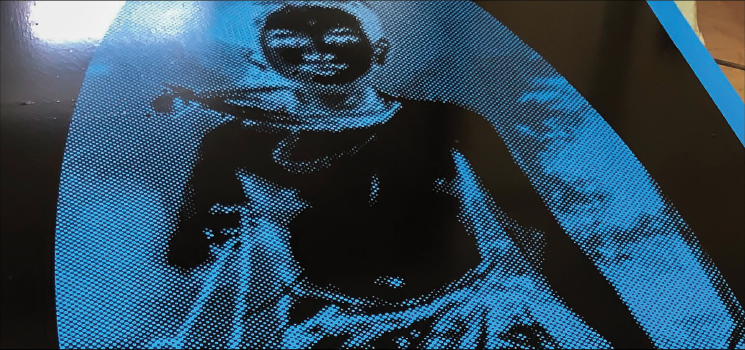
Vinyl stencil applied to backside of mirror in preparation for sandblasting.
Overview
A graphic installation translating raster imagery into a halftone pattern suitable for sandblasting on mirrored glass surfaces. The project required adapting traditional halftone printing concepts into a fabrication process capable of preserving detail while withstanding abrasive blasting.
A graphic installation translating raster imagery into a halftone pattern suitable for sandblasting on mirrored glass surfaces. The project required adapting traditional halftone printing concepts into a fabrication process capable of preserving detail while withstanding abrasive blasting.
Process
The source image was converted into a high-contrast halftone pattern to simulate tonal gradients through dot density. Because standard stencil material was too thick to capture the fine dot structure, an alternative approach was developed using vinyl as a precision stencil medium. This allowed the detailed halftone pattern to be cut, weeded, and applied successfully to the mirror surface.
The source image was converted into a high-contrast halftone pattern to simulate tonal gradients through dot density. Because standard stencil material was too thick to capture the fine dot structure, an alternative approach was developed using vinyl as a precision stencil medium. This allowed the detailed halftone pattern to be cut, weeded, and applied successfully to the mirror surface.
After installation, the stencil protected selected areas while the exposed sections were sandblasted from the rear of the mirror to remove the reflective backing. The etched areas were then painted to complete the graphic.
Result
The finished piece translates photographic tone into a durable graphic installation that retains detail while interacting with reflective glass surfaces. The project demonstrates experimentation with materials, fabrication methods, and image processing to achieve a precise visual outcome.
The finished piece translates photographic tone into a durable graphic installation that retains detail while interacting with reflective glass surfaces. The project demonstrates experimentation with materials, fabrication methods, and image processing to achieve a precise visual outcome.